Caudalie Night Cream Review 2026: Worth It?
Dark spots are stubborn. They fade slowly, they return quickly, and most “brightening” creams either sting your face or do nothing at all.
I spent eight weeks testing the Caudalie Vinoperfect Brightening Glycolic Night Cream on combination, mildly reactive skin with sun spots along my cheekbones and old acne marks on my jaw.
This review covers the 2025 reformulation in the refillable jar, which is the version you will find on shelves in 2026. The texture changed. The ingredient list changed. Several longtime buyers noticed and complained.
In a Nutshell
- The active trio is real. Glycolic acid handles surface exfoliation, papain (papaya enzyme) loosens dead cells, and Viniferine — Caudalie’s patented grapevine shoot extract — targets pigment at the tyrosinase level. Caudalie claims Viniferine is 62x more effective than vitamin C, though that figure comes from an in vitro test, not human skin.
- The reformulation made it lighter. Squalane now sits second on the ingredient list, ahead of glycerin. Shea butter is gone. The cream feels thinner and looks faintly yellow compared to the old white version.
- Best for dull, uneven, normal to combination skin. It brightens overall tone reliably. It fades post-acne marks decently. It struggles with deep melasma.
- The fragrance is a genuine flaw. Parfum sits at the end of the list, and there is no fragrance-free option. Sensitive and rosacea-prone skin should skip it.
- The refill system saves real money. The jar runs $59 to $69 for 50 mL. The refill pod costs around $40.
- Results need consistency. Users who stop applying it report their brightness fading within weeks.
Caudalie Vinoperfect Brightening Glycolic Night Cream

- THE BRIGHT OVERNIGHT CREAM: The Brightening Glycolic Night Cream visibly reduces the appearance of dark spots and works as a gentle peel overnight to reveal a smooth, even-toned complexion. It targets dark spots, sun spots, melasma, and acne scars.
- CLINICAL RESULTS: 90% saw more radiant skin upon awakening.* *Clinical trial, % of satisfaction, 40 volunteers, 56 days.
Last update on 2026-08-02 / Affiliate links / Images from Amazon Product Advertising API Some of the links on this website are affiliate links, which means that at no additional cost to you, I earn a commission if you click through and make a purchase. I only recommend products and services that I believe will add value to my readers. Thank you for your support!
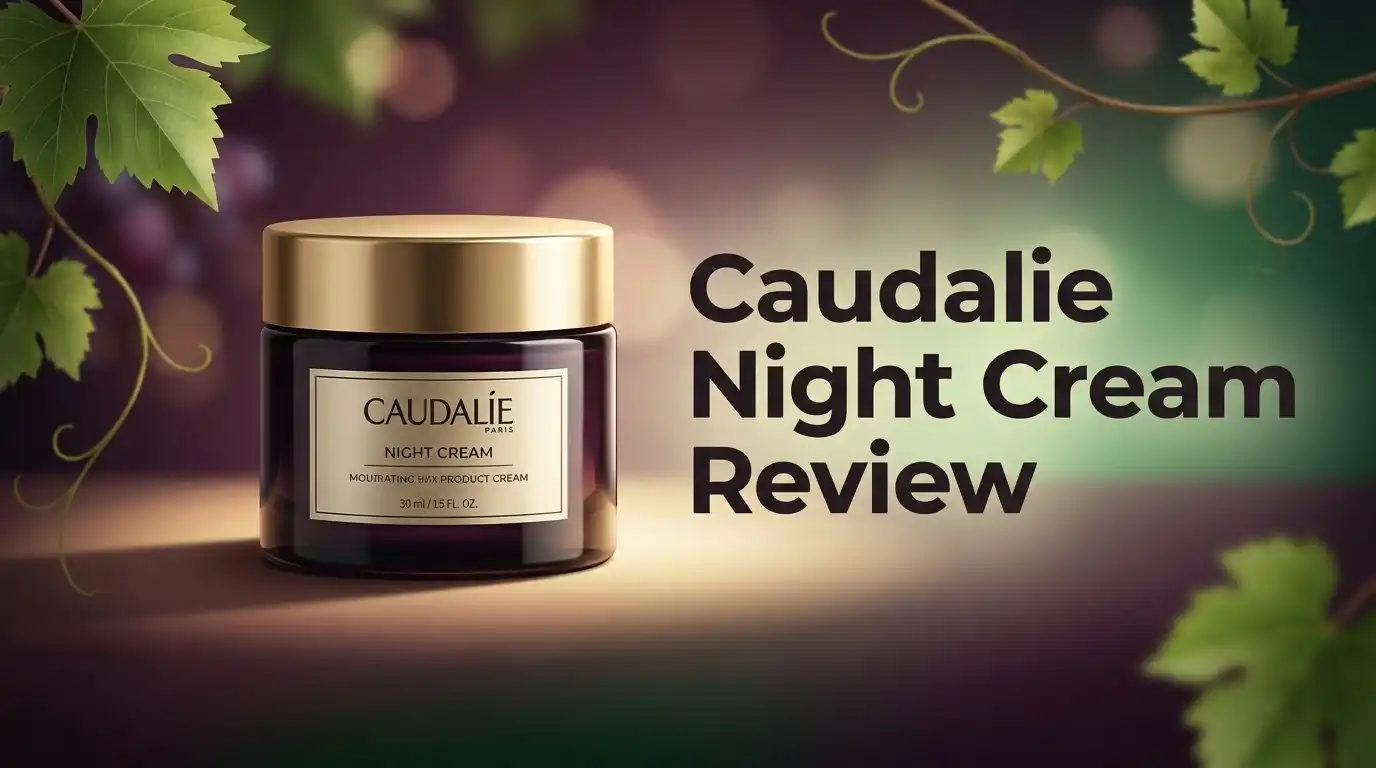
This is Caudalie’s overnight pigment treatment, sold in a 50 mL refillable jar. The brand positions it as a gentle nightly peel rather than a weekly acid treatment.
The formula pairs three exfoliating and brightening actives with a surprisingly generous moisturizing base. That combination matters, because most glycolic products dry you out.
Caudalie states 97% natural origin ingredients, vegan formulation, non-comedogenic testing, and dermatological testing. Yuka scores it 100/100, which the brand mentions often in its marketing.
The headline clinical figure is 93% saw brighter-looking skin. That number comes from a satisfaction survey of volunteers, not an instrumented measurement of melanin density. Worth knowing before you buy.
Caudalie also cites a separate Vinoperfect study showing dark spots visibly reduced by 63% after one bottle of the serum. That study covers the serum, not this cream, so do not transfer the expectation.
It is marketed for all skin types, though I would narrow that considerably. More on that later.
Unboxing, Packaging, and First Impressions
The outer box is recycled cardboard with the familiar Caudalie green print. No plastic wrap, no excess. It feels appropriately mid-luxury without feeling wasteful.
Inside sits the refillable jar: a weighted outer shell with a screw-off lid and an inner pod that pops out when empty. You buy the pod alone next time.
The mechanism works well. I twisted the empty pod out with my thumb, dropped in the new one, and it clicked flush on the first attempt.
Here is my honest packaging complaint. It is still a jar. You dip fingers into an AHA-containing formula every night, which introduces bacteria and exposes the actives to air repeatedly.
Caudalie includes no spatula. I use a small ceramic scoop I bought separately, and I would recommend you do the same.
The jar also does not travel well. The lid seals firmly, but the weight and the glass-look shell make it a poor carry-on candidate.
Top 3 Alternative for Caudalie Vinoperfect Glycolic Night Cream
If the fragrance, the price, or the jar format rules this one out for you, these three cover the same ground from different angles.

- THE NIGHTTIME WRINKLE SMOOTHER: This nourishing anti-aging cream visibly firms, lifts, and redefines facial contours overnight. Formulated with Caudalie’s exclusive patented blend of Resveratrol, Hyaluronic Acid, and Vegan Collagen.
- CLINICAL RESULTS: 98% saw smoother skin.* *Clinical study: % de satisfaction, 41 volunteers, 56 days.
Last update on 2026-08-02 / Affiliate links / Images from Amazon Product Advertising API Some of the links on this website are affiliate links, which means that at no additional cost to you, I earn a commission if you click through and make a purchase. I only recommend products and services that I believe will add value to my readers. Thank you for your support!
Caudalie Resveratrol-Lift Firming Night Cream

- Targeted Dark Spot Remover for Face: Serum for face that targets a spectrum of skin discoloration, visibly reducing sun spots, age spots, and post-acne marks or post-inflammatory hyperpigmentation for an even, revitalized complexion
- Promotes Radiant & Even Skin Tone: This dark spot corrector for face visibly corrects even stubborn dark spots, with long-lasting results, revealing brighter, more radiant skin over time. Face serum for women & men.

Last update on 2026-06-16 / Affiliate links / Images from Amazon Product Advertising API Some of the links on this website are affiliate links, which means that at no additional cost to you, I earn a commission if you click through and make a purchase. I only recommend products and services that I believe will add value to my readers. Thank you for your support!
La Roche-Posay Mela B3 Dark Spot Serum

- ADVANCED ANTI-AGING SKIN CARE: This retinol face moisturizer is a transformative overnight cream for women, designed to improve tone and texture.
- POWERFUL RETINOL NIGHT CREAM: Olay's retinol cream for face acts as a night moisturizer, providing deep hydration and anti-wrinkle benefits, essential for a youthful glow.
Last update on 2026-08-02 / Affiliate links / Images from Amazon Product Advertising API Some of the links on this website are affiliate links, which means that at no additional cost to you, I earn a commission if you click through and make a purchase. I only recommend products and services that I believe will add value to my readers. Thank you for your support!
Olay Retinol 24 Night Face Moisturizer
The Caudalie Resveratrol-Lift is the pick if your primary concern is firmness and fine lines rather than pigment. It sits in the same price tier and shares the brand’s grape-based philosophy.
The La Roche-Posay Mela B3 uses Melasyl and 10% niacinamide instead of acids. It is fragrance-light, tested across all skin phototypes, and a far safer choice for sensitive or deeply pigmented skin prone to post-inflammatory marks.
The Olay Retinol 24 is the budget option. It swaps exfoliation for retinol and peptides, it is fragrance-free, and it costs a fraction of the Caudalie.
Texture, Scent, and Absorption
The cream is a soft, slightly slack lotion-cream. Not whipped, not stiff. It slumps a little when you tilt the scoop.
The color is a pale butter-yellow, which comes from the grape seed oil and sunflower seed oil. Several longtime buyers flagged this tint as a downgrade from the old white formula. It is cosmetic only.
The scent is soft and green with a faint grape-skin sweetness. It dissipates within about two minutes on skin.
Absorption is genuinely good. A pea-sized amount spreads across my full face and sinks in within 60 to 90 seconds, leaving a satin finish rather than a greasy film.
It layered cleanly over a hydrating toner. It did not pill for me, even under a thin facial oil.
On my dry patches in winter, the new lighter texture was not quite enough alone. I now apply it and then press a few drops of squalane oil on top.
By morning my face feels smooth and comfortable, never tight. That part Caudalie got right.
The Ingredient List, Decoded
The 2025 formula opens with water, then squalane, then glycerin. Putting squalane that high is a smart move for an acid product, because it buffers dryness from the start.
Glycolic acid appears around eleventh position, after the emollients. Caudalie does not publish the percentage or the finished pH, which is my biggest transparency gripe.
Palmitoyl Grapevine Shoot Extract is Viniferine. It is a tyrosinase inhibitor, meaning it slows the enzyme your skin uses to manufacture melanin. Independent data on it is thin because it is proprietary.
Papain provides gentle enzymatic exfoliation. It works differently from acids and adds a second, milder resurfacing pathway.
Bisabolol and arginine are the calming safeguards. Arginine specifically forms a complex with AHAs that creates a slow-release effect and reduces sting.
Sodium hyaluronate, tocopherol, and grape seed oil round it out with hydration and antioxidant support.
The reformulation removed the declared limonene, linalool, and geraniol allergens. Parfum remains, so fragrance sensitivity is still a live risk.
My Eight Week Results
Week one gave me nothing but a smoother morning face. No sting, no flaking, no purge. That is unusual for a glycolic product.
By week three the change was in texture and clarity rather than spots. My skin took makeup better and my pores looked less shadowed.
Around week five my post-acne marks on the jaw had visibly softened. Two of them I now have to look for in good light to find.
The sun spots on my cheekbones were a different story. They lightened maybe 20 to 25 percent by week eight. Present, but faded at the edges.
Overall tone was the clearest win. My complexion reads more even in photos, and the sallow cast I get in winter mostly lifted.
I skipped four nights during a trip and noticed the brightness dip slightly. Other reviewers report the same rebound. This is a maintenance product, not a cure.
Nobody in my life said “your dark spots are gone.” Two people said my skin looked well-rested. That is the honest ceiling here.
Brand Claims Versus Honest Observations
Caudalie says it “acts as a gentle peel overnight.” My observation: it exfoliates gently and consistently, but you will never feel a peel. There is no tingle and no visible shedding.
Caudalie says 93% saw brighter-looking skin. My observation: brightness is the claim this product actually delivers on, and it delivers within about three weeks.
Caudalie says Viniferine is 62x more effective than vitamin C. My observation: that is a lab-dish tyrosinase test. It says nothing about how much brightening you get on a human cheek.
Caudalie says it visibly reduces dark spots. My observation: it reduces shallow, recent marks well. Deep melasma and hormonal pigmentation barely moved.
Caudalie says it suits all skin types. My observation: the fragrance and the acid together make that claim too generous.
Caudalie says it is non-comedogenic. My observation: I agree. Eight weeks, zero clogged pores, and the base skips heavy butters entirely.
The marketing is not dishonest. It is just optimistic about spots and quiet about pH.
Who This Night Cream Is Not For
Sensitive, rosacea-prone, or eczema-prone skin should pass. Fragrance plus glycolic acid plus papain is three potential irritants stacked in one jar.
Anyone already using nightly retinoids should be careful. Layering this on top of tretinoin or adapalene invites redness and barrier damage. Alternate nights instead.
People with true melasma will likely feel let down. Melasma needs professional treatment and rigorous daily SPF, not an over-the-counter AHA cream.
Very dry skin in cold climates may find the new lighter texture insufficient on its own. The old shea-based version was richer.
Fragrance avoiders have no workaround. There is no unscented variant.
Budget-conscious buyers should know the math. At roughly $65 for 50 mL, this is around four times the cost of a solid drugstore alternative.
Finally, anyone unwilling to wear sunscreen daily should not buy this. Glycolic acid increases photosensitivity, and without SPF you will darken the exact spots you are trying to fade.
Pros and Cons
Here is the balance sheet after eight weeks of nightly use.
Pros
- Glycolic acid, papain, and Viniferine work through three separate mechanisms, which is more thoughtful than most single-active brighteners.
- The base is genuinely nourishing. Squalane, glycerin, sodium hyaluronate, and grape seed oil prevent the dryness that usually comes with AHAs.
- Absorption is fast and the finish is satin, not greasy. It layers under oils without pilling.
- No stinging or purging in my testing, thanks to the arginine buffer and the low, undisclosed acid load.
- The refillable jar cuts roughly $25 off every repurchase and reduces packaging waste meaningfully.
- Overall brightness and skin texture improve reliably within three to four weeks.
Cons
- Fragrance is present and there is no fragrance-free version, which excludes a large group of buyers.
- Caudalie does not disclose the glycolic acid percentage or the finished pH, so you cannot compare it fairly against competitors.
- The jar format exposes actives to air and fingers, and no spatula is included.
- Deep or hormonal pigmentation barely responds. Expect tone improvement, not spot erasure.
- Results fade when you stop, so this becomes an ongoing expense.
- The 2025 reformulation is thinner and yellow-tinted, and longtime users have publicly disliked the change.
- At $59 to $69 for 50 mL, the price is steep for the strength delivered.
How to Use It Correctly
Apply it at night only, on clean, slightly damp skin. Damp skin helps the humectants pull water in rather than out.
Start with three nights per week for the first two weeks. If your barrier stays calm, move to nightly.
Use a pea-sized amount. More product does not accelerate the fading and only increases irritation risk.
Do not combine it in the same session with retinol, prescription retinoids, benzoyl peroxide, or a second AHA or BHA. Alternate nights instead.
Vitamin C serums pair fine with it if you use the vitamin C in the morning and this at night.
Sunscreen the next day is not optional. Use SPF 30 minimum, reapplied if you are outdoors, or you will undo eight weeks of work in one afternoon.
Give it a full eight to twelve weeks before judging. Pigment cells turn over slowly, and no honest brightener works in a fortnight.
Store the jar out of direct light. Grape seed oil and tocopherol both degrade with heat and UV exposure.
Price, Refills, and the Final Verdict
The full refillable jar sells for $59 to $69 for 50 mL depending on retailer and promotion. The refill pod runs around $40.
If you use it nightly, one jar lasts roughly ten to twelve weeks. That works out to about $0.55 per night on refills, which is reasonable for this category.
The refill system is the strongest value argument Caudalie makes here, and it is a genuine one rather than a marketing gesture.
So, is it worth it? Yes, if your goal is overall brightness, smoother texture, and fading recent marks on normal, dry, or combination skin. It performs that job comfortably and without irritation.
No, if you have sensitive skin, deep melasma, a tight budget, or a fragrance intolerance. In those cases the La Roche-Posay Mela B3 or a fragrance-free niacinamide routine will serve you better.
I would repurchase the refill. I would not call it a miracle, and I would not recommend it to my most reactive clients.
Frequently Asked Questions
How much glycolic acid is in the Caudalie night cream?
Caudalie does not disclose the percentage or the finished pH. Based on its position in the ingredient list and the complete absence of sting, I estimate it sits in the low single digits.
Can I use this if I already use retinol?
Yes, but not on the same night. Alternate them, or your barrier will protest with redness and flaking within a week.
Will it cause purging?
I saw none, and Sephora community members report the same. The acid load appears too low to trigger a meaningful purge.
Is it safe during pregnancy?
Glycolic acid is generally considered acceptable in low topical concentrations, unlike retinoids. Confirm with your own doctor, since I cannot assess your situation.
How long until I see dark spots fade?
Expect brightness in three to four weeks and visible spot softening around week six to eight. Deep pigmentation may take considerably longer or never fully respond.
Does the new formula work as well as the old one?
The actives are intact. The base is lighter and the color is yellower, which some longtime users dislike, but the brightening performance held up in my testing.
Do I need the serum too?
No. The serum has stronger clinical data behind it, but stacking both is expensive. Pick one and stay consistent with it.
Can oily skin use it?
Yes. The base skips heavy butters, tested non-comedogenic, and never felt heavy on my oily T-zone.

Hello, I’m Ava Davis, the founder and curator of Lovely Beauty. As a passionate advocate for self-care and beauty, I created Lovely Beauty as a haven for like-minded individuals to explore, learn, and grow. On Lovely Beauty, you’ll find a treasure trove of beauty tips, tricks, and inspiration, all designed to help you cultivate a more loving and compassionate relationship with yourself.