
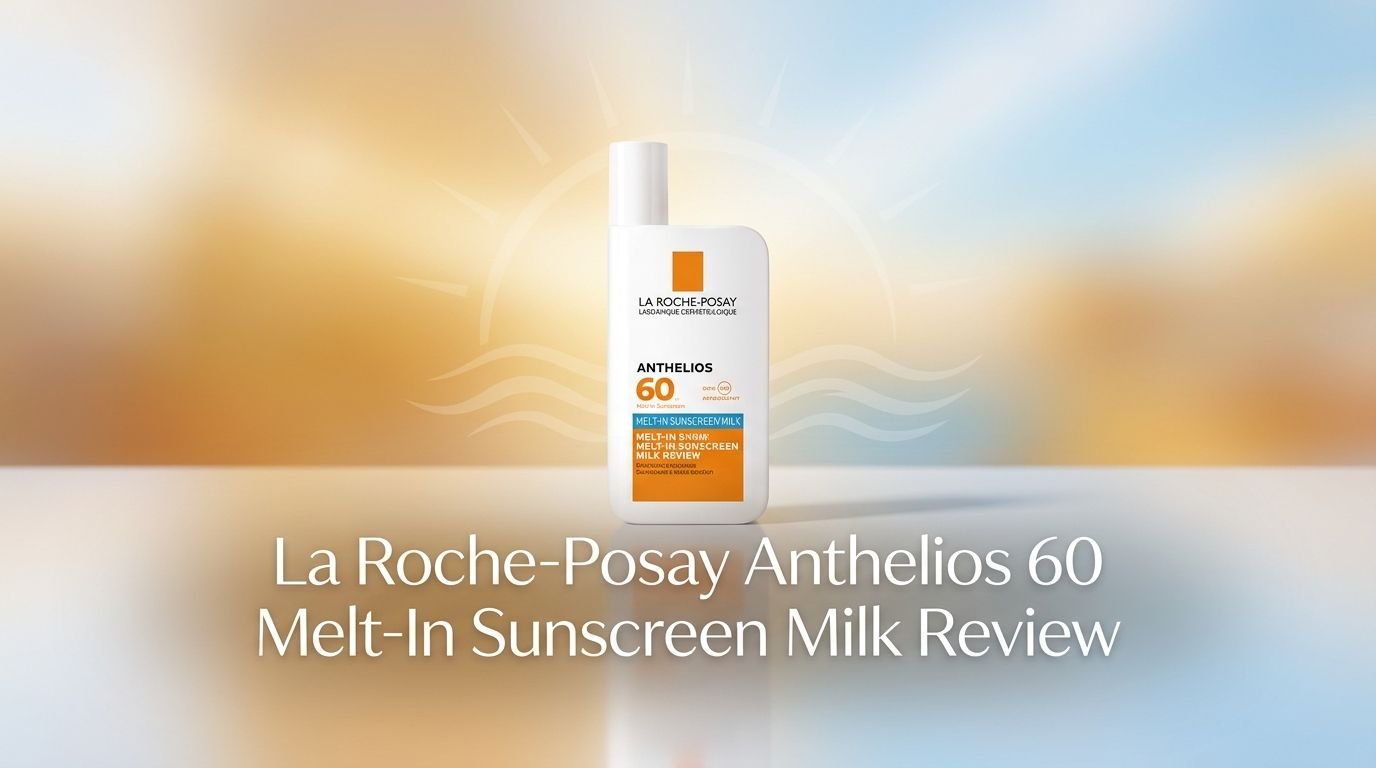
La Roche-Posay Anthelios 60 Melt-In Sunscreen Milk Review 2026
Summer is coming, and your skin needs a sunscreen it can count on. The La Roche-Posay Anthelios 60 Melt-In Sunscreen Milk has earned praise from dermatologists, beauty editors, and everyday users for years. But does it still hold up in 2026 with so many new sunscreens flooding the market?
This sunscreen promises broad spectrum SPF 60 protection, a lightweight milk texture, and fast absorption. It also claims to work on sensitive skin without clogging pores. Those are big promises. In this review, we put every single one of them to the test.
We will cover its ingredients, how it feels on the skin, its water resistance, and who it works best for. We also look at what real users say about it and compare it against top alternatives.
Key Takeaways
- La Roche-Posay Anthelios 60 Melt-In Sunscreen Milk provides broad spectrum UVA/UVB protection with SPF 60. It uses Cell-Ox Shield technology to combine photostable UV filters with antioxidants for strong defense against sun damage and premature aging.
- The formula is oil free, fragrance free, paraben free, and oxybenzone free. It passed allergy testing and earned a non-comedogenic label. This makes it a solid option for people with sensitive or acne-prone skin types.
- Its milk texture absorbs fast and leaves a smooth, velvety finish on the skin. According to La Roche-Posay’s consumer study, 94% of users said the sunscreen absorbed quickly, and 90% reported it left their skin feeling moisturized.
- The sunscreen is water resistant for up to 80 minutes. This makes it a good choice for outdoor activities, pool days, and beach trips. You should reapply after swimming, sweating, or towel drying.
- It works on both face and body, which means one product covers everything. At $37.99 for 150ml, it sits at a premium price point. However, dermatologists consistently recommend it for its reliable UV protection and skin-friendly formula.
- Some users with darker skin tones have reported a slight white cast. Blending it thoroughly can help reduce this issue. People with very oily skin may also notice a slight sheen rather than a fully matte finish.

- Multi-award winning body sunscreen with advanced protection in a fast-absorbing, velvety texture that leaves skin hydrated and smooth. Broad Spectrum SPF 60
- Allure 2022 Best of Beauty Award Winner. Water resistant (80 minutes)

Last update on 2026-06-07 / Affiliate links / Images from Amazon Product Advertising API Some of the links on this website are affiliate links, which means that at no additional cost to you, I earn a commission if you click through and make a purchase. I only recommend products and services that I believe will add value to my readers. Thank you for your support!
What Is La Roche-Posay Anthelios 60 Melt-In Sunscreen Milk?
The La Roche-Posay Anthelios 60 Melt-In Sunscreen Milk is a chemical sunscreen made for both face and body use. La Roche-Posay developed it as part of their Anthelios sun care line. This line is one of the most recommended sunscreen collections by dermatologists across the United States.
The product uses Cell-Ox Shield technology. This technology combines broad spectrum UVA and UVB filters with antioxidants to protect your skin from sun damage. The antioxidant protection comes from Senna Alata, a tropical leaf extract. This ingredient helps fight free radicals caused by UV exposure, which can speed up skin aging.
La Roche-Posay formulated this sunscreen to feel lightweight on the skin. The “melt-in milk” name describes its texture. It goes on as a smooth liquid and absorbs quickly without leaving a heavy or greasy layer. Board-certified dermatologist Dr. Rina Allawh has described it as a “double threat” for its sun protection and antioxidant benefits.
The product comes in a 3 oz and 5 oz bottle. It retails at $37.99 for the 150ml (5 oz) size. You can buy it from major retailers like Amazon, Ulta, Dermstore, and the official La Roche-Posay website. It consistently ranks as one of the brand’s top selling sunscreens.
How Does It Feel on the Skin?
Texture matters a lot with sunscreen. A great formula means nothing if it feels thick, sticky, or greasy. This is where the Anthelios 60 Melt-In Milk really stands out. The milk texture is light and fluid. It spreads across the skin with very little effort.
When you first apply it, the sunscreen feels slightly cool and wet. Within about 30 seconds, it absorbs and leaves a smooth, satin-like finish. It does not pill or clump, even over moisturizer or other skincare products. This makes it easy to layer under makeup.
Some users describe the finish as slightly dewy rather than fully matte. If you prefer a completely matte look, you might want to set it with a light powder. People with dry or normal skin types tend to love the finish as is. Those with oily skin may notice a bit of shine, especially by midday.
The sunscreen does not have a strong smell. La Roche-Posay made this product fragrance free, which is a big plus for sensitive noses and reactive skin. There is a very faint product scent that fades within minutes after application.
Overall, the wear experience is comfortable. You do not feel like you are wearing sunscreen at all after a few minutes. This is a major reason why it has earned such strong loyalty among daily sunscreen users.
Key Ingredients Breakdown
Understanding the ingredients helps you decide if a sunscreen is right for your skin. The Anthelios 60 Melt-In Sunscreen Milk uses a blend of chemical UV filters as its active ingredients. These include Avobenzone (3%), Homosalate (10.72%), Octisalate (3.21%), and Octocrylene (6%).
Avobenzone is one of the most effective UVA filters available in the U.S. market. It absorbs the full range of UVA rays. However, it can break down in sunlight on its own. La Roche-Posay stabilizes it with Octocrylene to maintain its effectiveness throughout the day.
Homosalate and Octisalate are UVB filters. They absorb UVB rays to help prevent sunburn. Together with Avobenzone, they create broad spectrum coverage that blocks both UVA and UVB radiation.
The standout feature is the Cell-Ox Shield technology. This combines the UV filters with the antioxidant Senna Alata extract. Senna Alata is a tropical plant known for its ability to fight free radicals. Free radicals from UV exposure cause oxidative stress, which leads to wrinkles, dark spots, and loss of skin elasticity.
The formula is also free from parabens, fragrances, and oxybenzone. It passed allergy testing and carries a non-comedogenic label. These qualities make it safe for sensitive and acne-prone skin types. La Roche-Posay also excludes octinoxate from the formula, which some regions have banned due to environmental concerns.
Top 3 Alternatives for La Roche-Posay Anthelios 60 Melt-In Sunscreen Milk
1. EltaMD UV Sport Sunscreen Lotion SPF 50

- WATER AND SWEAT RESISTANT UP TO 80 MINUTES: EltaMD UV Sport can be applied to wet and dry skin and is specially formulated for active lifestyles and sport activities; it won’t drip in your eyes and sting when you sweat or rinse off easily in the water
- FULL BODY SUN PROTECTION: EltaMD sports sunscreen lotion delivers broad spectrum UVA and UVB sun protection for the whole body; it’s formulated with Zinc Oxide and helps protect your skin during long days at the pool, beach, park, or field
Last update on 2026-06-07 / Affiliate links / Images from Amazon Product Advertising API Some of the links on this website are affiliate links, which means that at no additional cost to you, I earn a commission if you click through and make a purchase. I only recommend products and services that I believe will add value to my readers. Thank you for your support!
2. Neutrogena Ultra Sheer Dry-Touch Sunscreen SPF 55

- POWERFUL SPF 55 BROAD SPECTRUM PROTECTION: Ultra Sheer Dry-Touch SPF 55 delivers high-performance UVA/UVB defense with Helioplex Technology, helping protect skin from sunburn while supporting a healthy-looking, radiant complexion.
- LIGHTWEIGHT, NON-GREASY & FAST ABSORBING: Dry-Touch technology creates a clean, ultra-light, non-greasy feel that absorbs quickly for an invisible finish. This lightweight sunscreen layers easily under makeup and leaves no white cast.
Last update on 2026-06-09 / Affiliate links / Images from Amazon Product Advertising API Some of the links on this website are affiliate links, which means that at no additional cost to you, I earn a commission if you click through and make a purchase. I only recommend products and services that I believe will add value to my readers. Thank you for your support!
3. CeraVe 100% Mineral Sunscreen SPF 50

- [ BROAD SPECTRUM SUNSCREEN FOR FACE ] 100% Mineral-based, chemical free sunscreen, also known as a physical sunscreen, reflects UVA/UVB rays to help protect the skin. Daily face sunscreen for broad spectrum protection.
- [ MINERAL SUNSCREEN APPLICATION ] Mineral based sunscreen for face can often leave a white cast. For best results, apply evenly to the entire face & neck in thin layers & thoroughly massage into skin. Facial sunscreen is suitable for use under makeup.
Last update on 2026-06-07 / Affiliate links / Images from Amazon Product Advertising API Some of the links on this website are affiliate links, which means that at no additional cost to you, I earn a commission if you click through and make a purchase. I only recommend products and services that I believe will add value to my readers. Thank you for your support!
SPF 60 Protection: What Does It Really Mean?
Many people assume higher SPF numbers offer dramatically more protection. That is not exactly how it works. SPF 30 blocks about 97% of UVB rays. SPF 60 blocks about 98.3% of UVB rays. The difference in percentage is small, but the extra protection still matters.
Where SPF 60 becomes more useful is in real world conditions. Most people do not apply enough sunscreen. Studies show that the average person applies only 25% to 50% of the recommended amount. A higher SPF number gives you a safety margin for those thinner applications.
The broad spectrum label on this product is equally important. Broad spectrum means it protects against both UVA and UVB rays. UVB rays cause sunburn. UVA rays penetrate deeper and cause premature aging, dark spots, and increase skin cancer risk. You need protection from both.
La Roche-Posay’s Anthelios line has earned high marks from Consumer Reports for UV protection accuracy. The brand uses photostable filters that do not break down quickly in sunlight. This means the SPF 60 rating holds up during actual outdoor use, not just in a lab setting.
For daily use, SPF 30 is considered adequate by most dermatologists. But if you spend a lot of time outdoors, exercise in the sun, or have fair skin, SPF 60 adds a meaningful layer of safety. This product delivers that protection in a formula that does not feel heavy or uncomfortable.
Water Resistance and Outdoor Performance
This sunscreen is rated as water resistant for 80 minutes. This is the highest water resistance rating allowed by the FDA. It means the sunscreen maintains its SPF protection for up to 80 minutes during swimming or heavy sweating.
For beach days, pool time, and outdoor workouts, this rating matters a lot. Many everyday sunscreens offer no water resistance at all. Some offer only 40 minutes. The 80-minute water resistance on this product gives you solid protection during extended outdoor activities.
However, water resistance does not mean waterproof. No sunscreen is truly waterproof. After 80 minutes in the water or after towel drying, you need to reapply. La Roche-Posay recommends reapplying at least every two hours during regular outdoor exposure.
During real world testing, users report that this sunscreen stays put well during moderate sweating. It does not run into the eyes easily, which is a common complaint with many liquid sunscreens. This makes it a good option for runners, hikers, and people who play outdoor sports.
One thing to keep in mind is that sand and towels can physically remove sunscreen from the skin. Even with 80-minute water resistance, you should reapply after any contact that might rub the product off. Consistent reapplication is the most important part of effective sun protection.
Who Should Use This Sunscreen?
The Anthelios 60 Melt-In Sunscreen Milk works well for a wide range of skin types and lifestyles. Its formula checks many boxes that different users look for. Here is a breakdown of who benefits most from this product.
People with sensitive skin will appreciate the fragrance-free, paraben-free, and allergy-tested formula. La Roche-Posay tests its products on sensitive skin specifically. The brand’s connection to thermal spring water research gives it a strong reputation in the sensitive skin space.
If you have dry to normal skin, the milk texture provides a comfortable, lightly hydrating finish. The consumer study from La Roche-Posay shows that 90% of users felt the product left their skin moisturized. This is unusual for a sunscreen, as many formulas dry out the skin.
Outdoor enthusiasts benefit from the 80-minute water resistance and high SPF 60 rating. Runners, swimmers, hikers, and anyone who spends long hours in the sun can rely on this product for strong protection.
It is also a good choice for families. The product works on both face and body. This means one bottle covers everyone. La Roche-Posay recommends consulting a doctor before using it on children under six months of age.
People with very oily skin or those who prefer a fully matte finish might want to try a sample first. The satin finish may feel slightly dewy on oily skin types.
Pros and Cons of the Anthelios 60 Melt-In Sunscreen Milk
Every product has strengths and weaknesses. Knowing both sides helps you make a smart purchase decision. Let us look at what this sunscreen does well and where it falls short.
The biggest pro is its UV protection. The Cell-Ox Shield technology delivers reliable broad spectrum SPF 60. The photostable filters hold up in sunlight, and the added antioxidants provide extra defense against premature aging. This is one of the strongest protection profiles in its category.
The texture earns high marks. It absorbs fast, feels lightweight, and does not leave a sticky residue. Many users say they forget they are wearing sunscreen after applying it. This comfort factor leads to better compliance, which means more consistent protection.
The clean formula is another strong point. No fragrance, no parabens, no oxybenzone, and no octinoxate. It is oil free and non-comedogenic. These features make it suitable for a broad audience, including those with sensitive and reactive skin.
On the downside, price is a factor. At around $37.99 for 5 oz, it costs more than many drugstore sunscreens. If you use it daily on face and body, you will go through bottles quickly.
White cast is another concern. Some users, particularly those with deeper skin tones, have noticed a faint white cast. Thorough blending helps, but it may not disappear completely for everyone. Lastly, the slightly dewy finish may not satisfy people who want a completely matte look.
How to Apply It for Best Results
Proper application is just as important as the sunscreen formula itself. You can have the best sunscreen on the market, but it will not protect you fully if you apply it wrong. Here are some tips to get the most out of this product.
Apply it 15 minutes before sun exposure. This gives the chemical filters time to bind to your skin and start working. If you apply it and immediately step into the sun, you will have a brief window of reduced protection.
Use a generous amount. For your face alone, you need about a nickel-sized dollop. For your entire body, you should use about one ounce, which is roughly a shot glass full. Most people apply far less than this, which reduces the effective SPF.
Spread it evenly across all exposed skin. Do not skip areas like the ears, back of the neck, tops of the feet, and the part in your hair. These are common spots where people get sunburned because they forget to apply sunscreen there.
Reapply every two hours during outdoor exposure. If you swim or sweat heavily, reapply after 80 minutes or immediately after towel drying. Set a timer on your phone if you tend to forget.
You can apply this sunscreen over your daily moisturizer. It layers well and does not pill under makeup. For the best results, let each skincare layer dry for about 60 seconds before applying the next one.
How Does It Compare to Other La Roche-Posay Sunscreens?
La Roche-Posay offers several sunscreens in the Anthelios line. Each one targets different preferences and skin types. Understanding the differences helps you pick the right one.
The Anthelios Melt-In Milk SPF 60 is the brand’s bestseller for face and body. It offers a milk texture that absorbs quickly. The Anthelios Ultra Light Fluid SPF 60 is another popular option. It has an even thinner consistency and works better for people who want a completely invisible finish on the face.
For those who prefer mineral sunscreen, La Roche-Posay makes the Anthelios Mineral Gentle Sunscreen SPF 50. This uses zinc oxide and titanium dioxide instead of chemical filters. It sits on top of the skin rather than absorbing into it. Mineral sunscreens are a good choice for people who react to chemical UV filters.
The Anthelios Melt-In Milk SPF 100 offers even higher protection. It shares a similar texture with the SPF 60 version. The main difference is the SPF level. For extremely sun-sensitive individuals or high-altitude activities, the SPF 100 version may provide extra peace of mind.
If you need a tinted option, the Anthelios Tinted Mineral SPF 50 adds light color correction. It blends into the skin and reduces the appearance of a white cast. This is a good alternative for deeper skin tones.
The Melt-In Milk SPF 60 remains the most versatile option in the lineup. Its combination of high SPF, fast absorption, body-and-face use, and clean formula makes it the go-to product for most users.
What Real Users Say About This Sunscreen
- Multi-award winning body sunscreen with advanced protection in a fast-absorbing, velvety texture that leaves skin hydrated and smooth. Broad Spectrum SPF 60
- Allure 2022 Best of Beauty Award Winner. Water resistant (80 minutes)
Last update on 2026-06-07 / Affiliate links / Images from Amazon Product Advertising API Some of the links on this website are affiliate links, which means that at no additional cost to you, I earn a commission if you click through and make a purchase. I only recommend products and services that I believe will add value to my readers. Thank you for your support!
User reviews give the most honest picture of a product. The La Roche-Posay Anthelios 60 Melt-In Sunscreen Milk has thousands of reviews across Amazon, Ulta, and other platforms. The overall consensus is strongly positive.
Many users highlight the fast absorption and lightweight feel. One Amazon reviewer wrote that the texture is “not greasy, heavy, or streaky” and that it “blends into your skin easily and quickly.” This matches the brand’s claim of a melt-in experience.
Sun protection performance gets consistent praise. Users who spend hours outdoors report no sunburn even during extended pool and beach sessions. One reviewer on LovelySkin said it provides “great sun protection even after swimming for 30 minutes.”
The fragrance-free formula earns positive feedback from sensitive skin users. Multiple reviewers with eczema, rosacea, and general skin sensitivity report no irritation or breakouts. This aligns with the product’s dermatologist-tested and allergy-tested claims.
The most common complaints involve white cast and price. A Reddit user on r/SkincareAddiction shared that the product “leaves a huge white cast” and asked if they were using it wrong. Other users suggested applying it in thin layers and blending thoroughly to minimize this issue.
Some oily skin users report that the finish is slightly shiny rather than matte. This is not a dealbreaker for most people, but those who want a fully matte sunscreen may want to explore other options in the Anthelios line.
Is It Worth the Price in 2026?
Price is always a valid concern with premium skincare. At $37.99 for 150ml, this sunscreen sits above the average drugstore option. A bottle of Neutrogena or Coppertone sunscreen with similar SPF costs roughly $10 to $15. So is the extra cost justified?
The answer depends on what you value. La Roche-Posay uses photostable UV filters that maintain their protection longer in sunlight. Many cheaper sunscreens degrade faster, which means their actual SPF performance drops during real outdoor use.
The clean ingredient list adds value. No fragrance, no parabens, no oxybenzone, and non-comedogenic. These features reduce the risk of irritation, breakouts, and allergic reactions. If you have spent money on skincare to treat problems caused by irritating sunscreens, the cost of prevention becomes easier to justify.
The Cell-Ox Shield antioxidant technology is another differentiator. Most budget sunscreens block UV rays but do nothing about free radical damage. The Senna Alata extract in this formula actively fights oxidative stress. This offers a skincare benefit beyond basic sun protection.
If you use it only on your face, one 5 oz bottle can last two to three months with daily use. That brings the daily cost to roughly 40 to 60 cents. For a dermatologist-recommended sunscreen with premium ingredients, that is reasonable.
For budget-conscious shoppers, Amazon frequently offers deals and subscribe-and-save discounts on this product. Buying the larger size also brings the per-ounce cost down. Overall, the performance and ingredient quality make it a worthwhile investment for people who prioritize skin health.
Tips for Storing and Maximizing Shelf Life
Sunscreen does expire, and expired sunscreen loses its effectiveness. The La Roche-Posay Anthelios 60 Melt-In Sunscreen Milk has a shelf life of about three years when stored properly. After opening, aim to use it within 12 months for best performance.
Store it in a cool, dry place away from direct sunlight. Heat and light break down UV filters over time. Keeping your sunscreen in a hot car or a sunny bathroom window reduces its effectiveness before the expiration date.
If you take it to the beach or pool, keep it in a cooler bag or under a towel in the shade. This prevents the formula from overheating. High temperatures can also change the texture and consistency of the product.
Check the expiration date on the packaging before each summer season. If the product has changed color, separated, or developed an unusual smell, discard it. These are signs that the formula has degraded.
Do not transfer sunscreen into smaller containers unless you plan to use it quickly. Exposure to air and outside contaminants can speed up degradation. Keep the original cap tightly closed after each use.
Buying fresh stock at the beginning of each season is a smart habit. This ensures you always have a fully effective product. If you buy in bulk during sales, store the extra bottles in a cool, dark closet to maintain their potency.
Final Verdict: Should You Buy It?
The La Roche-Posay Anthelios 60 Melt-In Sunscreen Milk remains one of the best all-around sunscreens you can buy in 2026. It delivers reliable broad spectrum SPF 60 protection in a formula that feels comfortable on the skin. The Cell-Ox Shield technology adds antioxidant defense that most competitors do not offer.
Its clean ingredient profile makes it safe for sensitive, acne-prone, and reactive skin types. The 80-minute water resistance covers outdoor activities and water sports. The dual face-and-body use means you only need one product instead of two.
The downsides are real but manageable. The white cast issue affects some users, particularly those with deeper skin tones. The slightly dewy finish may not appeal to everyone. And the price is higher than drugstore alternatives.
If you want a sunscreen that a dermatologist would recommend, that absorbs quickly, and that protects without irritating your skin, this product earns a strong recommendation. It has proven itself over many years and continues to hold its own against newer competitors. For most skin types and lifestyles, it is a reliable daily sunscreen that you can trust.
Frequently Asked Questions
Is La Roche-Posay Anthelios 60 Melt-In Sunscreen Milk a chemical or mineral sunscreen?
It is a chemical sunscreen. It uses Avobenzone, Homosalate, Octisalate, and Octocrylene as its active UV filters. These ingredients absorb UV rays and convert them into heat. It does not contain mineral filters like zinc oxide or titanium dioxide.
Does it leave a white cast on dark skin?
Some users with darker skin tones have reported a slight white cast. The best way to reduce this is to apply the sunscreen in thin layers and blend thoroughly. If white cast is a major concern, the Anthelios Tinted Mineral SPF 50 may be a better option.
Can I use this sunscreen on my face every day?
Yes. This product is designed for daily use on both face and body. It is oil free, non-comedogenic, and fragrance free. These features make it suitable for everyday wear under makeup or on bare skin.
Is it safe for children?
La Roche-Posay states that you should consult a doctor before using it on children under six months old. For older children, the fragrance-free and allergy-tested formula is generally safe. Always apply it generously and reapply regularly.
How often should I reapply this sunscreen?
You should reapply at least every two hours during sun exposure. If you swim or sweat heavily, reapply after 80 minutes of water activity or immediately after towel drying. Consistent reapplication is key to maintaining protection.
Does it work well under makeup?
Yes. Many users report that this sunscreen layers smoothly under foundation and other makeup products. It absorbs quickly and does not pill or clump. Let it dry for about 60 seconds before applying your makeup for the best results.
Where can I buy it at the best price?
You can purchase it on Amazon, Ulta, Dermstore, and the official La Roche-Posay website. Amazon often offers subscribe-and-save discounts. Shopping during seasonal sales events can also help you save money on this product.

Hello, I’m Ava Davis, the founder and curator of Lovely Beauty. As a passionate advocate for self-care and beauty, I created Lovely Beauty as a haven for like-minded individuals to explore, learn, and grow. On Lovely Beauty, you’ll find a treasure trove of beauty tips, tricks, and inspiration, all designed to help you cultivate a more loving and compassionate relationship with yourself.